


Wise: International Transfers
Wise Payments Ltd.
Wise: International Transfers is the kind of finance app that makes its value clear the first time you need to move money across a border. I found the experience focused on a practical problem: sending, receiving, and spending in different currencies without having to build my whole financial routine around a traditional bank. It is free to install, aimed at everyone, and developed by Wise Payments Ltd., but its usefulness depends heavily on how often international money actually enters your life.
During my first week with it, the appeal came from having international transfers and currency management gathered in one place. Instead of treating a foreign payment as an unusual banking event, the app makes it feel like a regular task. That change in perspective is important for remote workers, travelers, students abroad, people supporting family overseas, and anyone paid in a currency different from the one used for everyday spending.
How Wise fits into real financial routines
The first-week appeal is strongest when a transfer is already on your mind
The app is easiest to appreciate when I have a concrete reason to open it. A transfer to a friend abroad, money needed for an overseas bill, or a balance held for an upcoming trip gives the interface an immediate purpose. I do not need to invent a reason to use it; the benefit is tied to a real financial task. That makes the early experience more convincing than an app that asks me to reorganize my habits before it becomes useful.
The worldwide spending angle also gives Wise a role beyond one-off transfers. I can think of it as a companion for a trip or a way to manage money that crosses borders regularly. The important distinction is that it is not simply a domestic budgeting tool with a currency button added afterward. Its identity is built around international movement, so people who regularly deal with more than one currency are likely to understand its purpose quickly.
For a realistic everyday example, imagine a freelance designer living in one country while receiving payment from a client in another. With a conventional bank, that person may need to check incoming-transfer instructions, wonder which account details to use, and then work out how to move the money into a usable balance. Wise can make that workflow more coherent by putting the international-money task in a dedicated app. The advantage is not just speed; it is having fewer disconnected steps to remember.
Related News

Why WhatsApp Messenger Still Makes Everyday Communication Feel Easy

Jurassic World: The Game Is the Better Dino Tycoon for Strategic Players

Threads in Real Life: Who Should Join, Lurk, or Leave

How SHEIN Turned Shopping Into an Endless Content Feed

How to Make Fortnite Feel Smarter on Mobile

Should You Switch to Microsoft Outlook on Mobile?
That said, I would not recommend installing it simply because international finance sounds useful. If all your income, bills, and spending happen in one currency, a normal bank app may already cover your needs with less reason to maintain another financial account. Wise earns attention when cross-border activity is part of life, not when it is an occasional curiosity.
What I would check before sending money
The first habit I would build is reviewing the complete transfer screen before confirming anything. I look at the amount being sent, the currency received, the recipient information, and the final result rather than focusing only on the headline exchange rate. A transfer can look attractive at the rate level while still being unsuitable for a particular deadline or recipient arrangement. The app is helpful, but it does not remove the need to read carefully.
I would also save the recipient details in a consistent way and avoid rushing through a payment just because I have used the same person before. International transfers are less forgiving of small mistakes than sending money to a local contact. A familiar name does not guarantee that the account information is still correct, and a second look is a much cheaper form of maintenance than trying to repair an incorrect payment.
Gallery
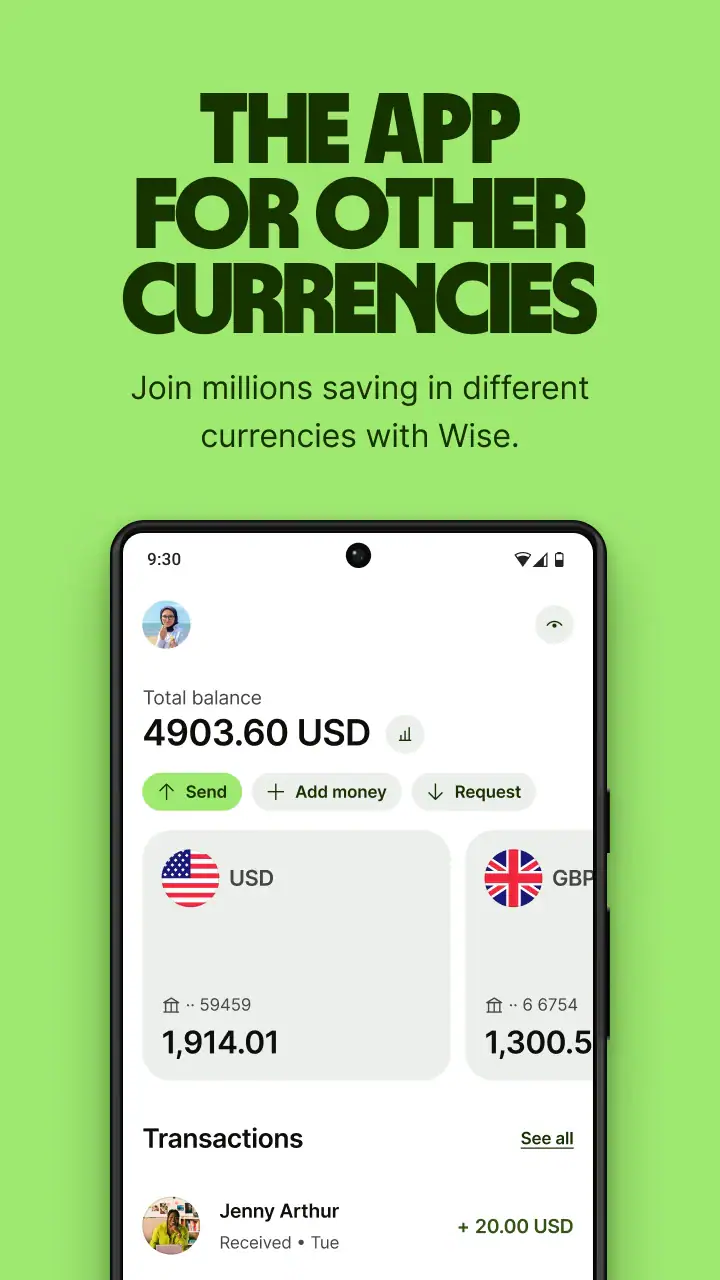
Another useful approach is to separate planned transfers from spontaneous spending. If I know a rent payment or family contribution is due, I would prepare it early enough to leave room for checking the details and dealing with any verification or processing step. Wise can simplify the process, but it cannot make an international deadline as flexible as a local instant payment.
The month-to-month value comes from repetition, not novelty
After the first successful transfer, the question changes from “Can this solve my problem?” to “Will I keep using it?” In my view, the answer is yes for people with recurring international needs. The app becomes more valuable when I use it for a pattern: receiving money from abroad, holding funds for travel, paying someone in another country, or spending while away from home.
That recurring value is practical rather than entertaining. I am not opening Wise to browse or pass time. I am opening it because it can become a dependable checkpoint in a monthly routine. The best long-term users are likely to be people who can define a repeated workflow, such as checking an incoming payment, moving part of it, and reserving the rest for foreign expenses.
Its scale also suggests that it has become a familiar choice for many people. The app has more than ten million installs, an average rating of 4.8 from around 1.7 million ratings, and roughly 17 thousand written reviews. Those figures do not prove that every transfer will be effortless, but they do indicate that Wise is not a niche experiment. I still judge it by my own situation, because a popular international-transfer app can be unnecessary for someone whose finances never leave one currency.
The current Android version is 9.15.3, and the app supports Android 7.0 or later. That makes it accessible on a broad range of devices, including older phones that may not run the newest operating system. I would still keep the app and phone updated when possible, especially for a finance tool, but the relatively modest minimum requirement makes it easier to include in an existing mobile setup.
Recurring workflows that make it earn a permanent place
One strong workflow is using Wise as a dedicated travel-money layer. Before a trip, I can plan the currencies I expect to use instead of treating every overseas purchase as a surprise. During the trip, that separation can make it easier to understand which money is intended for travel and which belongs to my normal domestic account. After returning home, I would review the remaining balance and decide whether it has a genuine future purpose rather than leaving it forgotten.
A second workflow suits people who receive international income. I would use a regular calendar reminder to check whether expected money has arrived, confirm the amount, and move only what I need for immediate expenses. This creates a simple review point and helps prevent the app from becoming a passive container that I never inspect. The value comes from pairing the app with a routine, not from assuming the app will manage the routine for me.
A third use case is shared international spending. Friends or relatives in different countries may need to settle costs without relying on a chain of informal promises. Wise can be useful as the place where the transfer is prepared and documented in my own financial routine. I would still agree on the amount and currency with the other person before opening the app, because clarity between people matters just as much as the payment interface.
Maintenance is light, but the consequences are serious
The daily maintenance burden is lower than managing several separate bank arrangements, but it is not zero. I would keep recipient information current, monitor balances in currencies I actually use, and check notifications or transfer status when money is time-sensitive. I would also make sure I can access the account when traveling, since a finance app is less useful if I only discover an access problem at the airport or immediately before a payment is due.
Security habits matter more here than they do in a casual shopping app. I would use a strong device lock, avoid confirming transfers while distracted, and be cautious when a message or request pressures me to act immediately. Wise can provide a structured way to send money, but no app can protect a user who authorizes the wrong recipient after skipping the review step.
The main maintenance advantage is concentration. Instead of remembering how several banks handle foreign transfers, I can return to one dedicated service. The trade-off is that concentration creates dependence. If Wise becomes my only route for an important payment, I should keep a backup plan for emergencies, such as knowing which domestic account or contact can help if I cannot complete the transfer as expected.
Where fatigue begins after the novelty fades
The first source of fatigue is that international money is full of details. Currency selection, recipient information, timing, and the difference between sending and spending all require attention. Wise may present those choices more clearly than a general-purpose bank, but it cannot make them disappear. If I only use the app a few times a year, I may still need to reorient myself each time.
The second is mental separation. Holding money for different purposes can be useful, but it can also make my finances feel scattered if I do not maintain a simple personal record. I would not rely on the app alone to remember why a balance exists. A short note in my own budgeting system—such as “next trip” or “client payment”—can prevent confusion later.
The third is that a dedicated international service may feel excessive for a person who wants every financial product under one domestic bank. A traditional bank app may be better for someone who prioritizes a single dashboard for salary, local bills, savings, and everyday banking. Wise is more compelling when international activity is central enough to justify a separate home for it.
There is also a psychological fatigue that comes from checking exchange-sensitive transactions. Even when I understand the transfer, I may still wonder whether I chose the right moment or whether the result could have been different later. Wise can make the transaction easier to execute, but it cannot remove currency-market uncertainty. For routine payments, I would focus on predictability and timing rather than repeatedly chasing a theoretically perfect rate.
How it compares with the usual alternatives
Compared with a conventional bank, Wise feels more purpose-built for cross-border transfers and spending. A bank may be the better choice when I need a complete domestic relationship, branch support, or all my accounts in one place. Wise is the better fit when the international part is the problem I want solved cleanly and repeatedly.
Compared with using a card issued by my home bank while abroad, Wise can be easier to understand as a dedicated travel-money arrangement. The trade-off is that I am adding another financial service and another balance to monitor. For a short trip with very little foreign spending, keeping things simple with my existing bank may be reasonable. For frequent travel or repeated international payments, the dedicated approach becomes more persuasive.
Compared with informal methods such as asking a friend to pay first or using a patchwork of payment services, Wise offers a more deliberate workflow. That can reduce confusion, but it also means I have to take responsibility for setting up and reviewing the transfer myself. I prefer that trade when the amount or frequency makes a clear record and repeatable process worthwhile.
Who should keep using it, and who should skip it
I would recommend Wise to people who send money internationally more than once, receive income from another country, travel often, or need to spend across currencies without turning every transaction into a conversation with their bank. It is especially suitable for someone who values a focused app and is willing to check transfer details carefully.
I would be more cautious recommending it to someone whose financial life is entirely domestic. If you do not have a recurring international use case, the extra account and maintenance may not repay their cost in attention, even though the app itself is free. I would also suggest comparing the workflow with your existing bank before moving an important recurring payment, rather than assuming a specialized service is automatically better.
Wise is free and carries an Everyone content rating, so the barrier to trying it is low. Still, “free” should not be confused with “without financial decisions.” I would read the transfer summary every time, understand what the recipient will receive, and avoid using it for a deadline unless I have allowed enough time for the payment process.
A lasting verdict for everyday international money
My long-term view is favorable because Wise has a clear reason to remain installed after the first week. It does not depend on novelty; it depends on whether international transfers and spending recur in my life. When they do, the app can become a useful monthly habit: check incoming money, prepare planned transfers, review balances, and keep travel or foreign expenses separate from domestic spending.
The app does not eliminate the need for judgment. I still have to verify recipients, plan around timing, keep access secure, and decide whether a separate service is worth maintaining. Those are real points of friction, and they matter more for occasional users than for regular international users.
For me, the strongest reason to keep Wise is its focus. It gives cross-border money a dedicated place instead of making it feel like an awkward exception inside a domestic banking app. With a 4.8 average and a large installed user base, it has clearly found an audience, but the deciding factor remains personal: Wise earns lasting space when international money is a recurring part of your routine.
If that describes you, I would keep it available and build a small, repeatable checking habit around every transfer. If it does not, your existing bank may be simpler. That is the honest dividing line, and it is why I see Wise as a strong specialist finance app rather than a universal replacement for everyday banking.
FAQs for Wise: International Transfers
What is Wise and how does it work?
Wise, formerly known as TransferWise, is a financial technology company that allows users to make international money transfers at low cost. It uses the real exchange rate and charges a small, upfront fee. Unlike banks, Wise transfers money locally, meaning funds are exchanged directly in the country you’re sending to, avoiding high international fees.
Is Wise safe and secure to use for international transfers?
Yes, Wise is highly secure and regulated by financial authorities in multiple countries, including the Financial Conduct Authority (FCA) in the UK. It uses robust encryption and security measures to protect users’ data and transactions. Wise also ensures that your money is safeguarded in its bank accounts, separate from its operational funds.
How long does it take to transfer money with Wise?
The transfer time with Wise varies depending on the countries involved, payment method, and any security checks. Typically, transfers can take anywhere from a few minutes to two business days. Most users find their funds arrive faster than traditional bank transfers, thanks to Wise’s efficient local banking partnerships.
What currencies does Wise support for transfers?
Wise supports over 50 currencies, making it suitable for users who need to send money internationally. Some of the popular currencies include USD, EUR, GBP, AUD, CAD, and JPY. Before initiating a transfer, you can check the Wise app or website for a complete list of supported currencies.
Are there any fees for using Wise?
Wise charges a small, transparent fee for each transfer, which is usually a percentage of the amount being transferred plus a fixed fee. Unlike banks, Wise always uses the real mid-market exchange rate without any markup. The total cost is clearly displayed before you confirm your transfer, so there are no hidden fees.
Pros
- Low transfer fees compared to banks.
- Fast processing times for transfers.
- Transparent fee structure with no hidden costs.
- Supports multiple currencies efficiently.
- User-friendly interface simplifies transfers.
Cons
- Exchange rates may vary slightly.
- Limited customer support options.
- Requires internet connection for use.
- Not available in all countries worldwide.
- Verification process can be lengthy.


